Journey Through Nature

Connecting urban families with the outdoors

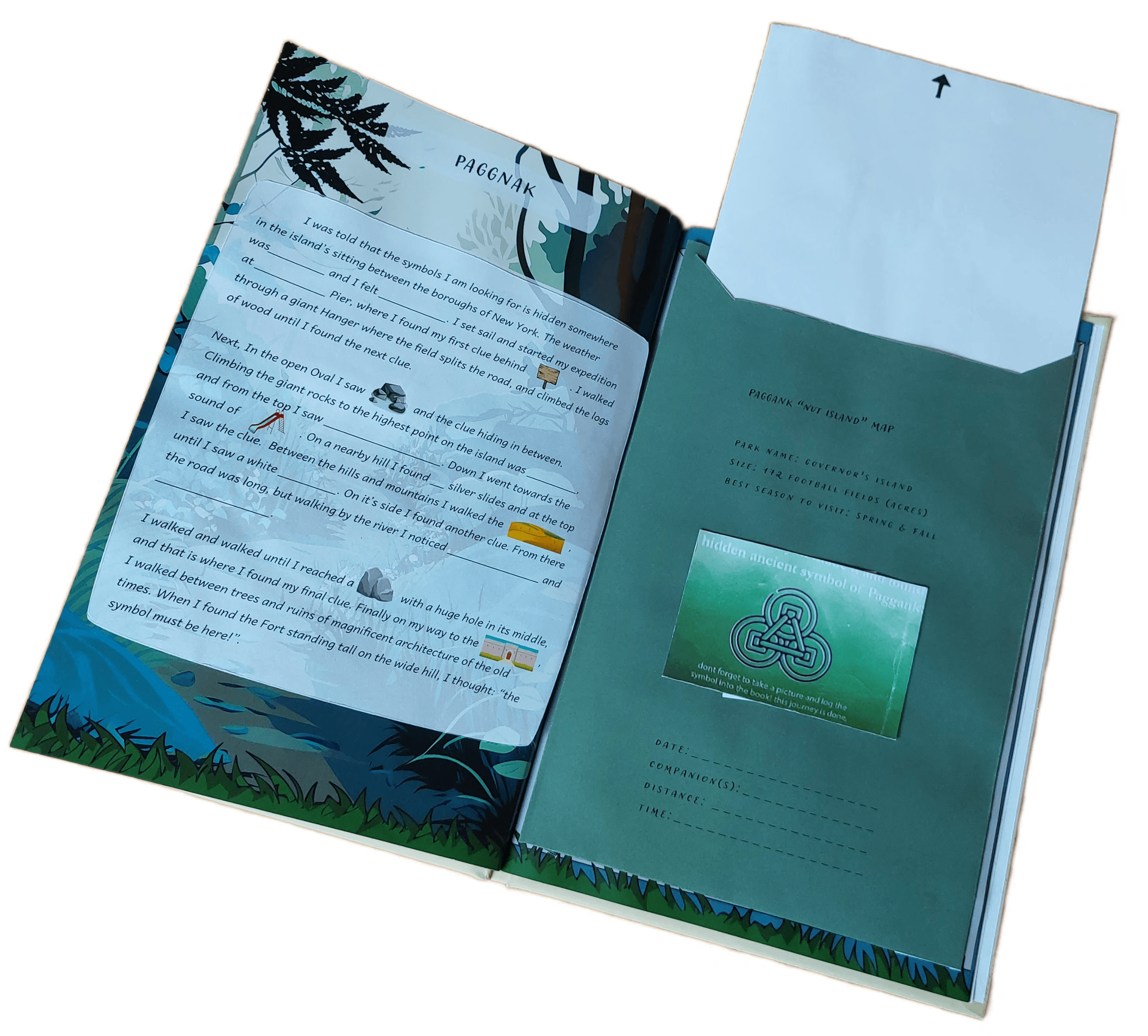
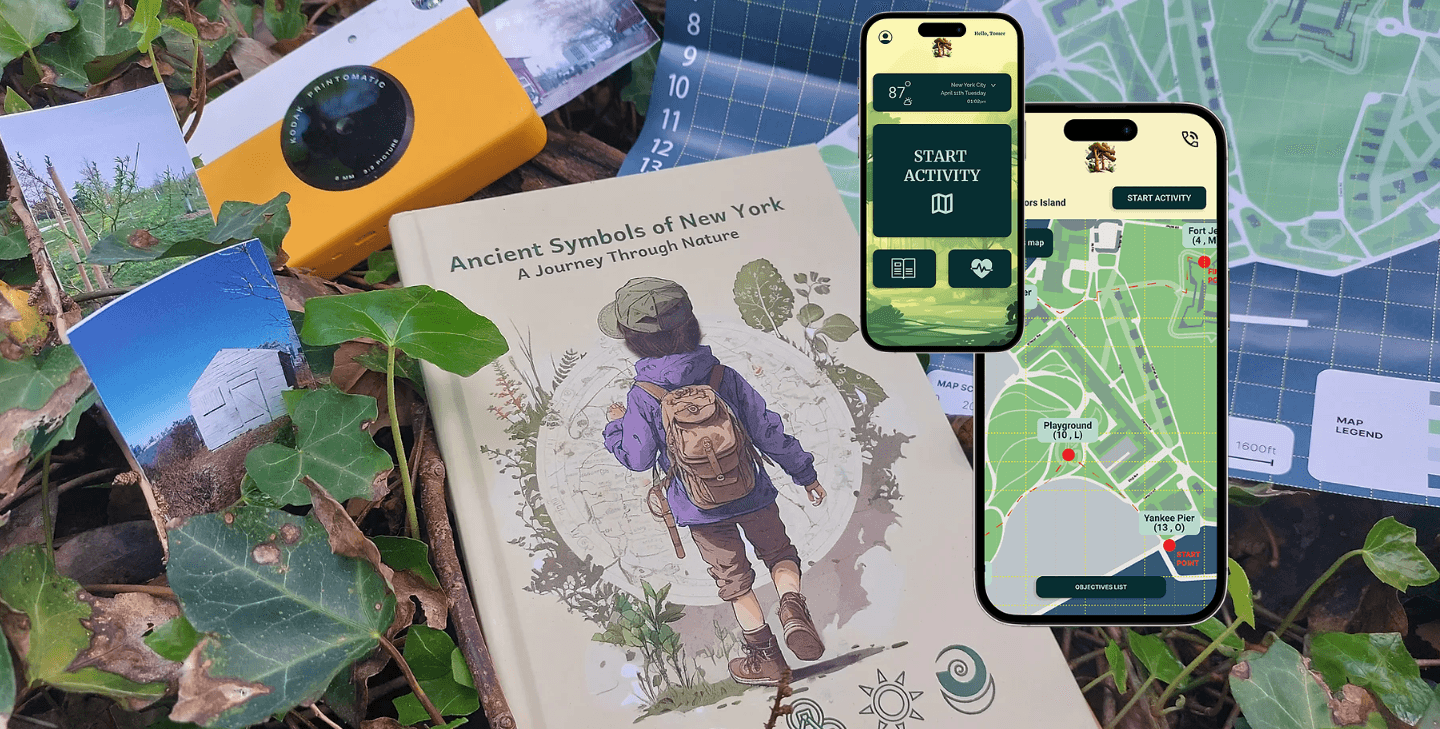
Children growing up in cities are increasingly disconnected from nature - a trend researchers link to rising anxiety, lower well-being, and what's called biophobia: the progression from unfamiliarity with nature into active avoidance of it. For my solo capstone project at Pratt Institute, I designed a two-part product system to address this: a physical activity book for kids and a companion mobile app for parents. The goal was to make outdoor exploration in urban parks feel accessible, safe, and genuinely fun for both.
Role | Solo Designer & Researcher

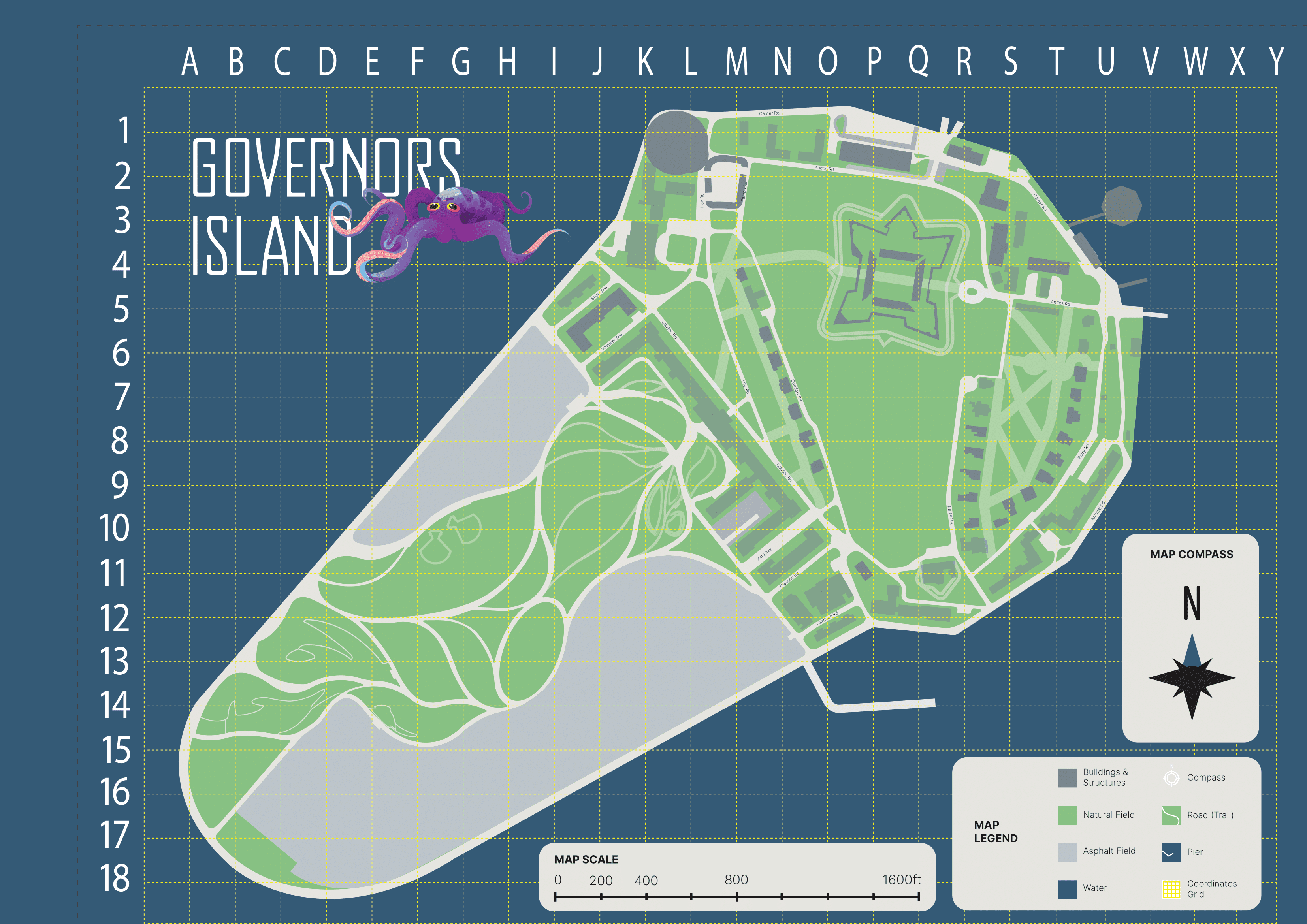
Platform | Mobile App + Physical Book + Park Maps

Team Type | Solo student project

Role | Solo Designer & Researcher

Platform | App + Book + Maps

Team Type | Solo student project

THE CHALLENGE

OUTCOME

The problem wasn't just that kids weren't going outside, it was a two-sided friction. Kids lacked a compelling reason to choose unstructured outdoor time over screens. Parents, especially urban-raised ones, lacked the confidence and information to facilitate it comfortably. Any solution that only addressed one side would fail in practice.

Additional constraints:

  • 3-month solo timeline covering research, concept, UX, and visual design.

  • No existing client or deployment context - this had to be validated through primary research.

  • Target users (young children) are among the hardest demographics to test with directly.

  • Needed to work within the reality of urban parks, not idealized natural environments.

This was a school project, there was no live deployment or long-term usage data. What I can speak to honestly:

  • Final product tested with real parents and a child - the core flows worked as intended with no major usability failures in the final round.

  • The dual-product structure (book + app) was validated as conceptually coherent by users - parents understood their role, and the book's adventure framing was engaging to children.

  • The accessibility issue raised by Itai led to a meaningful design revision, not just a cosmetic fix

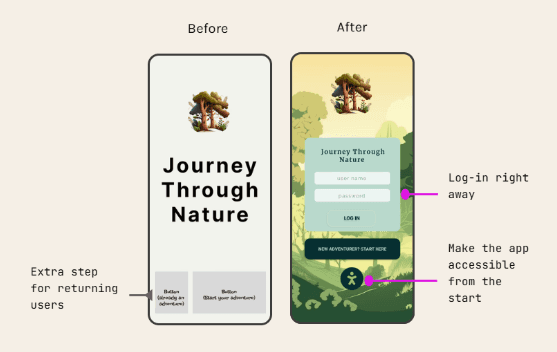
Extra step for returning users

Make the app accessible from the start

Log-in right away

Before

After

THE CHALLENGE

The problem wasn't just that kids weren't going outside, it was a two-sided friction. Kids lacked a compelling reason to choose unstructured outdoor time over screens. Parents, especially urban-raised ones, lacked the confidence and information to facilitate it comfortably. Any solution that only addressed one side would fail in practice.

Additional constraints:

  • 3-month solo timeline covering research, concept, UX, and visual design.

  • No existing client or deployment context - this had to be validated through primary research.

  • Target users (young children) are among the hardest demographics to test with directly.

  • Needed to work within the reality of urban parks, not idealized natural environments.

Extra step for returning users

Make the app accessible from the start

Log-in right away

Before

After

Extra step for returning users

Make the app accessible from the start

Log-in right away

Before

After

WHAT I DID

THE CHALLENGE

Chose the medium deliberately, not by defult - Physical book for kids to force screen disconnection, familiar medium, no additional device. App for parents because they carry their phones anyway, and it allowed health tracker integration without requiring new behavior.

Ran primary research before committing to the concept - Personas built from actual interviews, not invented. Tested with 10+ parents with age-relevant kids across two rounds. Key finding: parents wanted simplicity and control, not information density, opposite of my initial assumption.

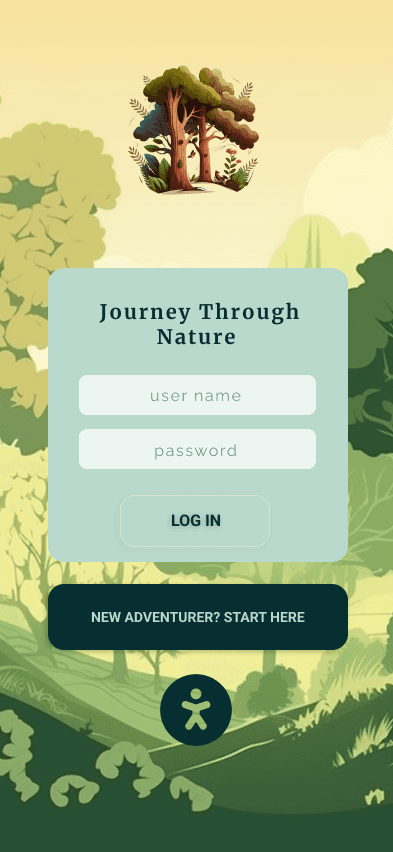
Conducted two rounds of testing with real users - Concept testing moved health app integration from settings to the main screen. Usability testing triggered a full onboarding redesign (eliminated the landing screen for returning users) and restructured the homepage to center the activity. Itai Avraham, a visually impaired parent, flagged a jarring mid-flow visual shift led to a more consistent visual system throughout.

Made a deliberate scope tradeoff - 3-month solo timeline. Prioritized validated UX over visual polish. The aesthetics are the weakest part of the project; the interaction model was pressure-tested against real users.

The problem wasn't just that kids weren't going outside, it was a two-sided friction. Kids lacked a compelling reason to choose unstructured outdoor time over screens. Parents, especially urban-raised ones, lacked the confidence and information to facilitate it comfortably. Any solution that only addressed one side would fail in practice.

Additional constraints:

  • 3-month solo timeline covering research, concept, UX, and visual design.

  • No existing client or deployment context - this had to be validated through primary research.

  • Target users (young children) are among the hardest demographics to test with directly.

  • Needed to work within the reality of urban parks, not idealized natural environments.

WHAT I DID

Chose the medium deliberately, not by defult - Physical book for kids to force screen disconnection, familiar medium, no additional device. App for parents because they carry their phones anyway, and it allowed health tracker integration without requiring new behavior.

Ran primary research before committing to the concept - Personas built from actual interviews, not invented. Tested with 10+ parents with age-relevant kids across two rounds. Key finding: parents wanted simplicity and control, not information density, opposite of my initial assumption.

Conducted two rounds of testing with real users - Concept testing moved health app integration from settings to the main screen. Usability testing triggered a full onboarding redesign (eliminated the landing screen for returning users) and restructured the homepage to center the activity. Itai Avraham, a visually impaired parent, flagged a jarring mid-flow visual shift led to a more consistent visual system throughout.

Made a deliberate scope tradeoff - 3-month solo timeline. Prioritized validated UX over visual polish. The aesthetics are the weakest part of the project; the interaction model was pressure-tested against real users.

OUTCOME

This was a school project, there was no live deployment or long-term usage data. What I can speak to honestly:

  • Final product tested with real parents and a child - the core flows worked as intended with no major usability failures in the final round.

  • The dual-product structure (book + app) was validated as conceptually coherent by users - parents understood their role, and the book's adventure framing was engaging to children.

  • The accessibility issue raised by Itai led to a meaningful design revision, not just a cosmetic fix

OUTCOME

This was a school project, there was no live deployment or long-term usage data. What I can speak to honestly:

  • Final product tested with real parents and a child - the core flows worked as intended with no major usability failures in the final round.

  • The dual-product structure (book + app) was validated as conceptually coherent by users - parents understood their role, and the book's adventure framing was engaging to children.

  • The accessibility issue raised by Itai led to a meaningful design revision, not just a cosmetic fix

LEARNING & REFLECTION

  • Hard to reach users require early planning - Testing with children is logistically difficult. I got real parent data, but direct child testing was limited. In a real product context, I'd build user access pipelines before the design phase starts, not during.

  • My own assumptions about behaviour were wrong - I assumed parents would prioritize information density. They actually wanted control and simplicity. The homepage redesign came directly from dropping that assumption and watching how people actually navigated.

  • Empathy doesnt substitute for lived experience - I thought I understood accessibility needs going in. Itai's feedback proved I didn't — not because I lacked empathy, but because I hadn't spent time with someone navigating a product under those actual conditions. That gap is only closed through direct exposure, not research alone.

press

to view the full case study

CONTACT ME

Made by Tomer Miara | 2026