4DnD

Overlay platform for VTTRPG - bridging the gap between physical and virtual

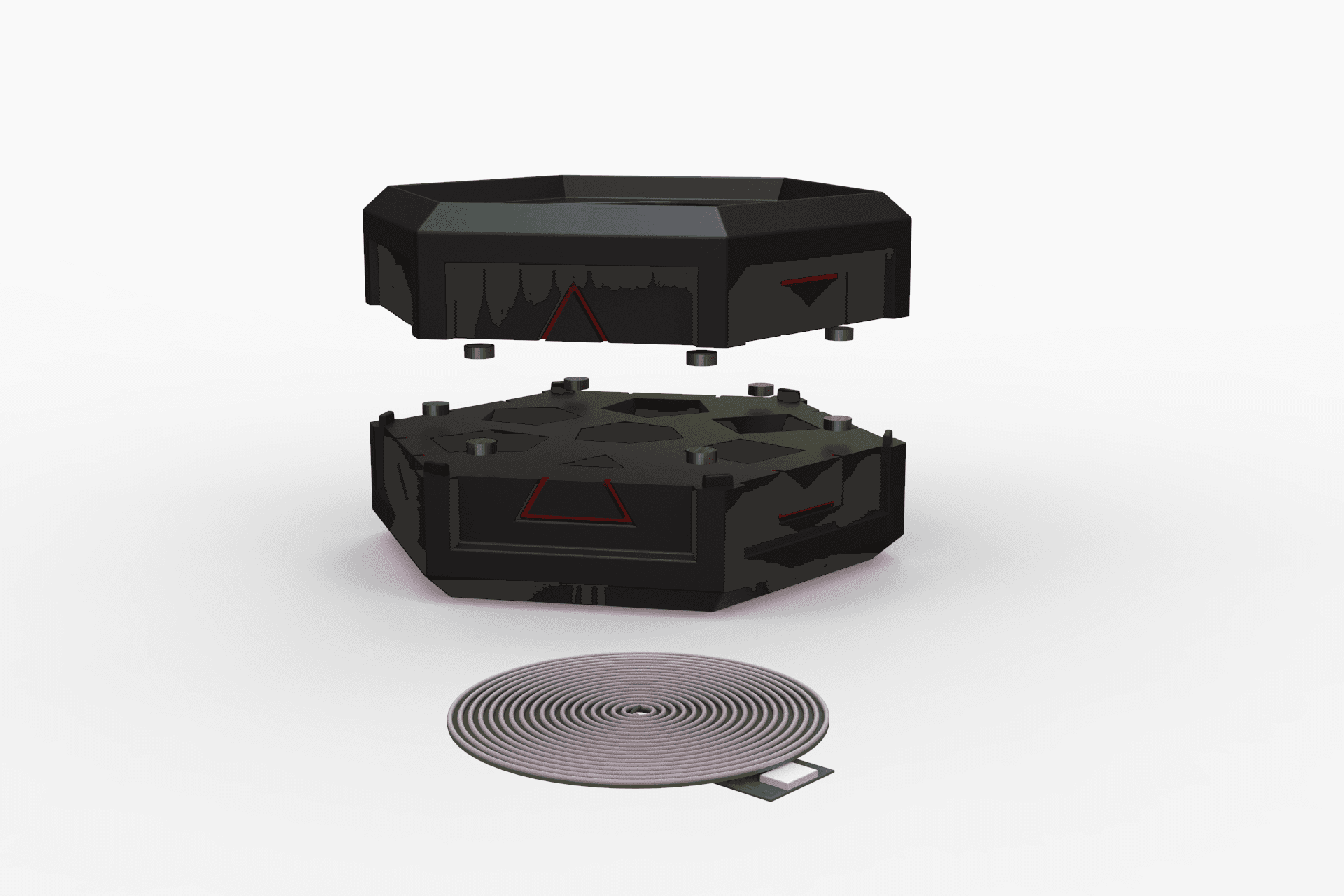
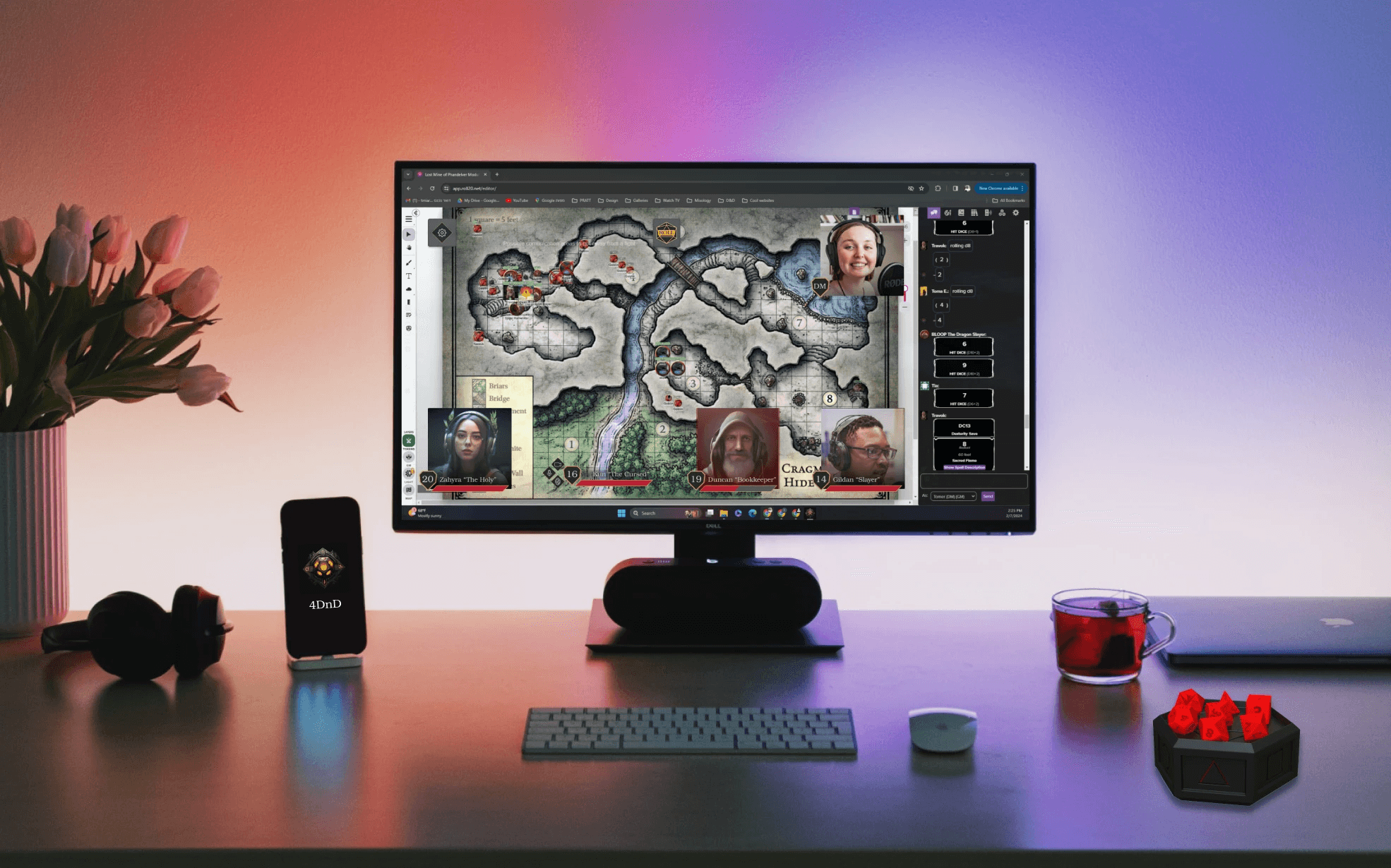
Virtual tabletop platforms surged during the pandemic, Roll20 alone grew from 5 million to 8 million users in under a year, yet none of the major platforms added voice customization or physical component integration. As a 15-year player myself, I saw the gap firsthand and designed 4DnD as my Pratt Institute capstone: an overlay platform paired with a physical dice set, designed to restore what remote play was losing without replacing the platforms players already use.
Role | Solo Designer & Researcher

Platform | Desktop overlay + physical dice set

Team Type | Solo student project

Role | Solo Designer & Researcher

Platform | Desktop overlay + physical dice sets

Team Type | Solo student project

THE CHALLENGE

OUTCOME

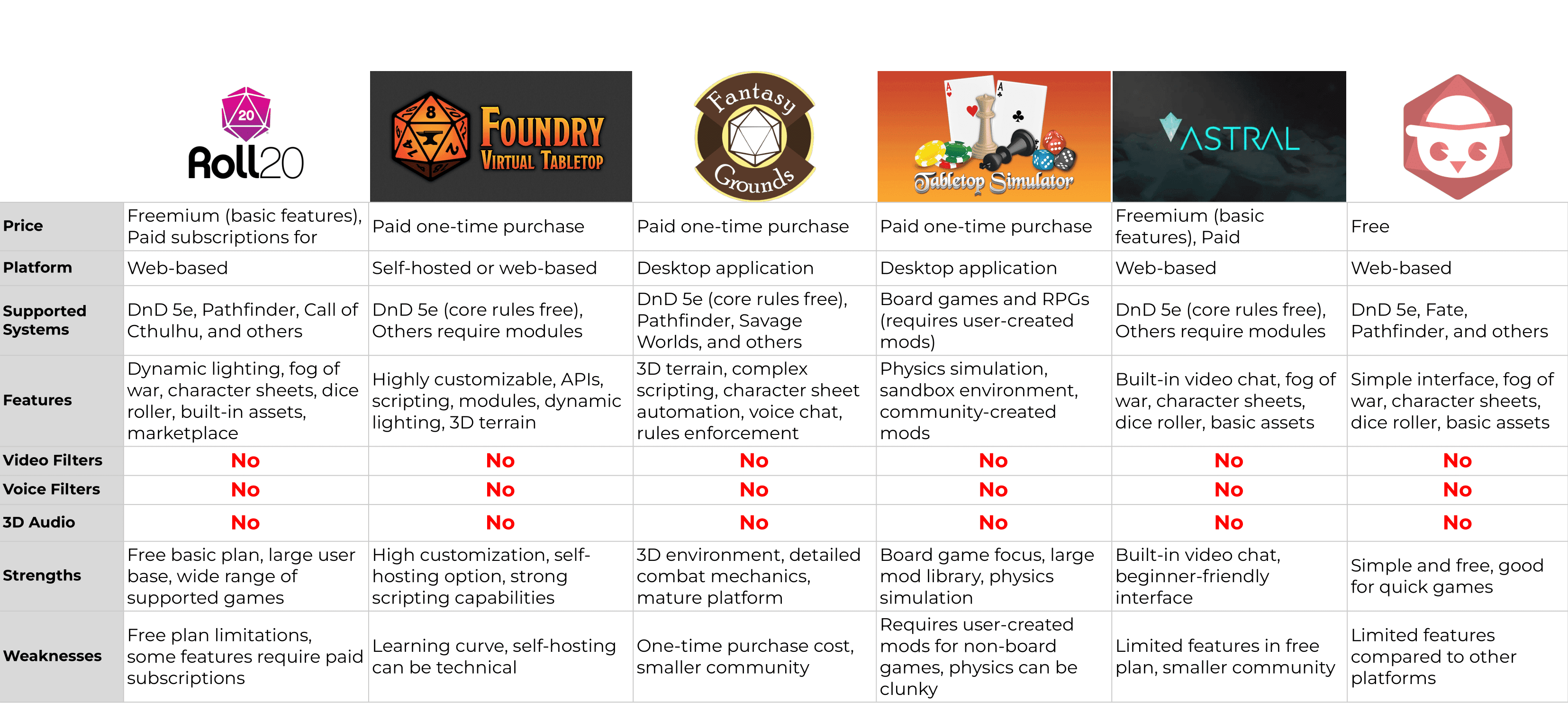
The problem wasn't that VTT platforms were bad - Roll20, Foundry, and Fantasy Grounds had well-established ecosystems with years of user assets and session data. Building a competing platform would mean asking users to abandon all of that. The real challenge was narrower: identify the specific experiential gaps that made remote play feel hollow, and solve only those on top of whatever platform a group already used.

School project - no real users or adoption metrics. Deliverables: complete hi-fi prototype, physical dice model, and competitive audit grounding every design decision. Strong faculty and peer feedback. No formal usability testing beyond the interview phase.

THE CHALLENGE

The problem wasn't that VTT platforms were bad - Roll20, Foundry, and Fantasy Grounds had well-established ecosystems with years of user assets and session data. Building a competing platform would mean asking users to abandon all of that. The real challenge was narrower: identify the specific experiential gaps that made remote play feel hollow, and solve only those on top of whatever platform a group already used.

WHAT I DID

THE CHALLENGE

  • Chose an overlay model deliberately - Auditing existing platforms confirmed none offered voice/video customization or physical integration. An overlay adds what's missing without disrupting what works - users rebuild nothing.

  • Ran 10+ user interviews across player types - In-person and virtual players, multiple game systems. Three personas on the full case study are composites from real people. Key themes: loss of physical dice tension, flat audio killing immersion, no character embodiment tools.

  • Prioritized features from research, not assumptions - 3D spatial audio (simulate sitting around a table), AI voice/video filters (support character embodiment - a core TTRPG behavior), Bluetooth physical dice (restore the tactile ritual of rolling). All three mapped directly to the most-cited pain points.

  • Delivered end-to-end - Full hi-fi Figma prototype across all flows. Physical dice box modeled and built. Bluetooth integration was outside project scope.

The problem wasn't that VTT platforms were bad - Roll20, Foundry, and Fantasy Grounds had well-established ecosystems with years of user assets and session data. Building a competing platform would mean asking users to abandon all of that. The real challenge was narrower: identify the specific experiential gaps that made remote play feel hollow, and solve only those on top of whatever platform a group already used.

WHAT I DID

  • Chose an overlay model deliberately - Auditing existing platforms confirmed none offered voice/video customization or physical integration. An overlay adds what's missing without disrupting what works - users rebuild nothing.

  • Ran 10+ user interviews across player types - In-person and virtual players, multiple game systems. Three personas on the full case study are composites from real people. Key themes: loss of physical dice tension, flat audio killing immersion, no character embodiment tools.

  • Prioritized features from research, not assumptions - 3D spatial audio (simulate sitting around a table), AI voice/video filters (support character embodiment - a core TTRPG behavior), Bluetooth physical dice (restore the tactile ritual of rolling). All three mapped directly to the most-cited pain points.

  • Delivered end-to-end - Full hi-fi Figma prototype across all flows. Physical dice box modeled and built. Bluetooth integration was outside project scope.

OUTCOME

School project - no real users or adoption metrics. Deliverables: complete hi-fi prototype, physical dice model, and competitive audit grounding every design decision. Strong faculty and peer feedback. No formal usability testing beyond the interview phase.

OUTCOME

School project - no real users or adoption metrics. Deliverables: complete hi-fi prototype, physical dice model, and competitive audit grounding every design decision. Strong faculty and peer feedback. No formal usability testing beyond the interview phase.

LEARNING & REFLECTION

  • Insider bias needs active managment - Domain fluency helped, but I had to work against assuming my experience was representative. Interviews surfaced perspectives I wouldn't have predicted.

  • Wireframes deserved more time - Moving to hi-fi too fast meant catching structural issues late.

  • Accessibility was an afterthought - Customization isn't accessibility. I didn't follow WCAG or test with users with specific needs - a gap I'd close if this continued.
press

to view the full case study

to view full case study

CONTACT ME

Made by Tomer Miara | 2026